You Probably Don’t Have a Product Problem
If you’ve been quietly tweaking your printable covers, swapping fonts, adjusting colors, and wondering why sales still haven’t shown up — I want to offer you something a little uncomfortable and a lot freeing: it’s probably not the product.
Ngl, this was hard for me to accept at first too. We put so much care into what we create. We want it to be good. We want it to be beautiful. And so when it sits there unseen, the instinct is to assume something’s wrong with it.
But here’s what actually shifts things — and what most beginner printable sellers don’t realize until months in: learning how to sell printables on Pinterest is really about learning how to drive consistent, intentional traffic. The product is step one. The system behind it is where everything changes.
Whether you’re just starting out with digital products or you’ve been at this for a while without the results you wanted, this post breaks down exactly what’s missing — and what to do about it.
More of a watcher than a reader? Totally valid — the full video is right here:
The Cycle That Keeps Most Sellers Stuck
Sound familiar? You create a printable, upload it to Etsy or your shop, share it once or twice on social media… and then nothing. Crickets. So your brain does what brains do — it looks for something to fix.
“Maybe the design isn’t clean enough.” “Maybe I picked the wrong niche.” “Maybe I need to start over with something better.”
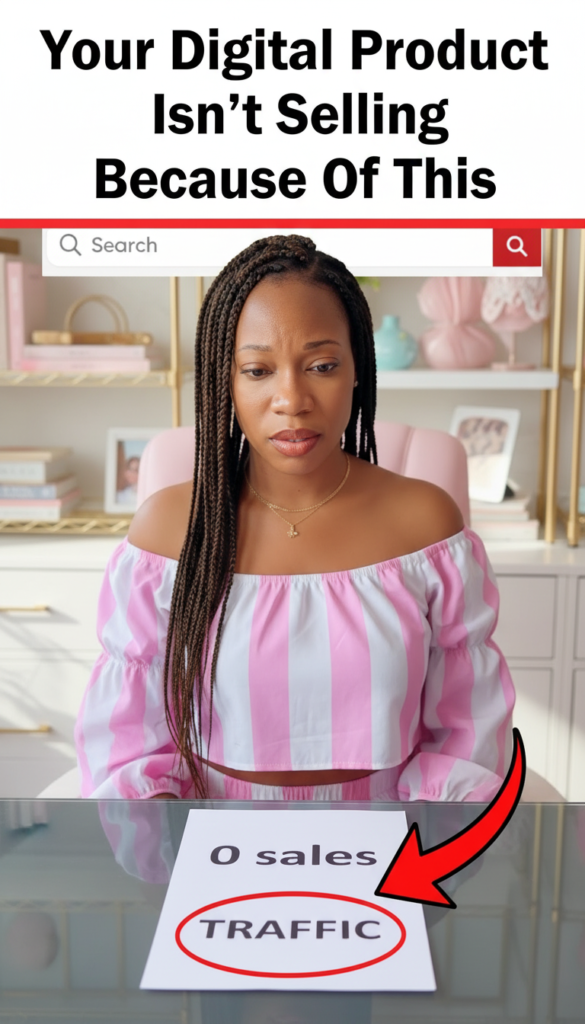
And the cycle starts again. New product, new niche, same result. Not because you’re doing it wrong exactly — but because redesigning isn’t the missing piece. Traffic is.
The uncomfortable truth is that even a simple, imperfect printable can sell consistently when the right people are finding it. And a gorgeous, well-designed one can sit completely invisible without a traffic strategy behind it. That’s the gap most sellers never close.
How to Sell Printables on Pinterest: It Starts With Understanding Traffic
Pinterest is not a social media platform — and the moment you start treating it like one, everything gets easier. It’s a search engine. People come to Pinterest actively looking for solutions, ideas, and yes, printables. That search intent is gold.
Here’s what that means practically: when someone searches “weekly planner printable” on Pinterest, they’re already in buying mode. They want what you have. Your job isn’t to convince them — it’s just to show up where they’re already searching.
Traffic on Pinterest is a skill. And like any skill, it’s learnable. It’s also cumulative — meaning the consistency you build today starts to compound over time. One pin gains traction, then another, and suddenly a product that had zero visibility is getting daily impressions from people who genuinely want it.
What “Consistent Distribution” Actually Means
Most beginners post one pin for one product and call it a day. That’s not a strategy — that’s hope. Real Pinterest distribution looks like this:
- 10–20 pin variations for a single product
- Multiple keyword angles targeting different search terms
- Fresh descriptions written for how real people actually search
- Ongoing publishing — not a one-time burst of posting
Each variation gives your product another chance to appear in a different search, in front of a different set of eyes. That’s how the algorithm works in your favor.
✨ Friend Tip: Before you create your next pin, type your product topic into the Pinterest search bar and look at the autocomplete suggestions. Those are real searches real people are doing right now — and they’re telling you exactly what keywords to target. Use them in your pin titles and descriptions.
The Blog Traffic Strategy That Proved Everything
Here’s a real example of how this plays out — and honestly, it changed how I think about this whole business model.
There was a period of focusing heavily on blogging — not on making more products, not on redesigning anything, just on creating solid, searchable content that people actually wanted to read. And when one of those blog posts started picking up momentum on Pinterest — getting consistent traffic, showing up in searches — a relevant digital product was attached directly to it. Same topic. Same audience. Same search intent.
Every single time that blog post gained traction, the product started selling. Sometimes within one to five days. Not because the product was special or revolutionary. Because the traffic was already there, warmed up, and looking for exactly what was being offered.
That’s the shift: traffic validates the product. Not the other way around.
Your First Printable Is a Testing Vehicle, Not an Income Stream
Hot take, but hear me out: your first digital product isn’t supposed to make you rich. It’s supposed to teach you what your audience responds to.
Your actual job with that first product is to drive traffic, watch your impressions, track saves, and monitor clicks. If traffic grows but sales don’t happen — then yes, adjust the product. But if traffic never comes? You don’t have a product problem. You have a visibility problem. And that’s a much more solvable issue.
The Three Levels of Selling Printables (Most People Are Stuck at Level One)
There’s a framework worth knowing here, because it explains why some sellers gain momentum while others stay stuck:
Level 1 — Product Creation: Making the thing. This is where most beginners spend 90% of their time.
Level 2 — Product Positioning: Choosing the right keywords, titles, and descriptions so the right people can find it.
Level 3 — Traffic Distribution: Consistently getting your product in front of people who are already searching for it.
Level three is where leverage actually lives. Traffic compounds. One pin that gains traction, one blog post that ranks, one keyword that starts pulling impressions — when that happens and you have a matched product attached to it, that’s when the passive part of “passive income” actually kicks in.
The sellers who win long-term aren’t necessarily the most talented designers. They’re the most committed to the system.
✨ Friend Tip: Tools like Keywords Everywhere and Pinclicks (which has a free 5-day trial and is genuinely one of the better research tools out there) can show you what’s actually getting saves and repins on Pinterest. Use data to guide your keyword strategy instead of guessing — it removes so much of the frustration.
How PinCraft AI Helps You Build the Consistency That Sells
Here’s the honest version of why most beginners can’t sustain a Pinterest strategy: it’s not that they don’t want to be consistent. It’s that creating 15 pin variations with different keyword angles and descriptions for every product is genuinely overwhelming when you’re doing it alone.
That’s exactly the problem PinCraft AI was built to solve. Instead of sitting there staring at a blank pin description wondering what keywords to use, you can generate multiple optimized pin titles, keyword variations, and description angles — organized into a real workflow for consistent publishing.
Tbh, the mental load reduction alone is worth it. When the cognitive overhead of “what do I post next” goes away, consistency becomes realistic. And consistency is what gets products in front of people.
You can try PinCraft AI completely free here: buy.pincraftai.com — it’ll be there whenever you’re ready to build your traffic system.
A Ready-Made Product to Drive Traffic To Right Now
If you’re looking for a solid, already-made digital product to start driving traffic to, the Kids Educational Activity Worksheets Set is honestly one of the smarter picks — especially if you’re in a family, parenting, or education niche where Pinterest traffic is genuinely abundant.
Parents are on Pinterest constantly searching for things like “printable kids worksheets,” “educational activities at home,” and “fun learning printables.” The search intent is already there. This set gives you a ready-made product to attach to that traffic without having to build from scratch.
You can find it here: Kids Educational Activity Worksheets Set — a great starting point if you want a tested product to build your traffic strategy around.
What Becomes Possible When the System Is Working
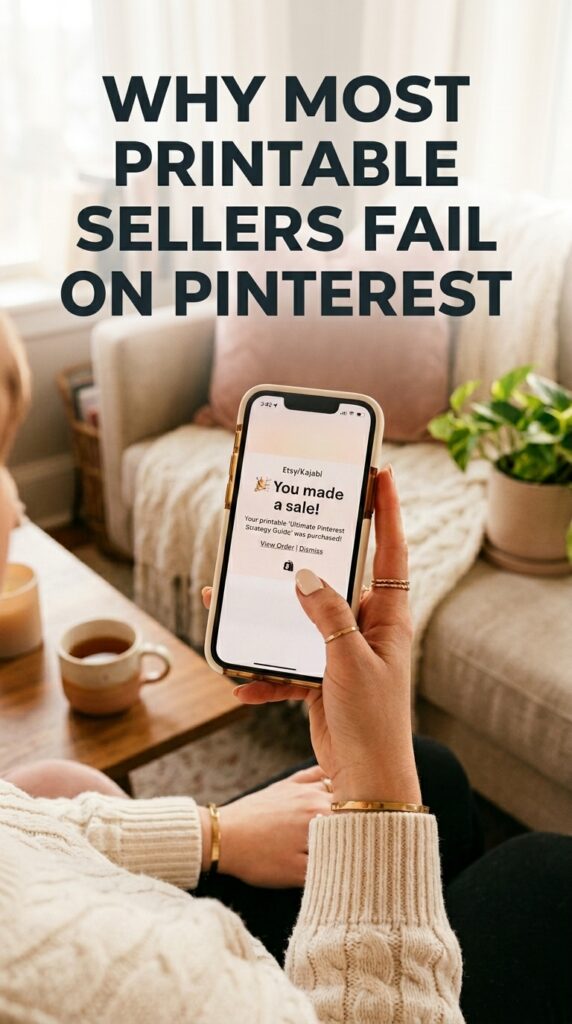
Imagine opening your phone to a sale notification — for something you created in an afternoon — because a blog post you wrote last month is still pulling in traffic. That’s not a fantasy. That’s what happens when traffic compounds.
Sellers in the printables space regularly see products that cost nothing to create generating consistent monthly income — not because the product is extraordinary, but because it’s sitting in front of people who are actively searching for it. $200 months become $800 months. $800 becomes a baseline. And it grows from there — because pins keep working while you sleep.
This is exactly what a tool like PinCraft AI helps make real: instead of posting randomly and hoping, you build structured workflows that keep your products visible. The system does what you set it up to do. That’s the shift.
✨ Friend Tip: Don’t wait until you have 10 products to start building your Pinterest presence. Start with one product, create 10–15 pin variations, and publish consistently for 60–90 days. The data you collect in that window will teach you more about your audience than any course ever could.
You Now Know Something Most Printable Sellers Don’t
And that’s genuinely worth something. You know that the design isn’t the thing holding you back. The traffic system is — and unlike talent, that’s completely buildable. Step by step, pin by pin, keyword by keyword.
Here are the three things worth carrying with you: First, Pinterest is a search engine — treat it like one by targeting real keywords your audience is already using. Second, consistency and distribution are skills, and they compound over time in ways that random posting never can. Third, your product’s job isn’t to be perfect — it’s to be findable.
When you’re ready to stop guessing and start building a real traffic system, PinCraft AI offers a free trial here. And if you want a ready-made product to drive traffic to right now, the Kids Educational Activity Worksheets Set is a genuinely solid starting point.
Take the next small step whenever it feels right. You’ve got this. ✨
❓ Frequently Asked Questions
How long does it take to see sales from Pinterest?
Pinterest is a slow burn compared to paid ads, but the results last much longer. Most sellers start seeing consistent impressions within 30–60 days of posting regularly, and meaningful sales traction typically builds between 60–90 days. The key is not stopping before the data has time to accumulate. Think of it as planting seeds rather than flipping a switch.
How many pins should I create for one printable product?
Aim for a minimum of 10–15 pin variations per product, spread across different keyword angles. Each pin is essentially a new door into the same room — the more doors you create, the more ways someone can find you. Use different titles, different image styles, and slightly different descriptions to cover a wider range of search terms.
Is this worth trying even for total beginners with no following?
Yes — genuinely. Pinterest is actually one of the better platforms for beginners because your success isn’t tied to how many followers you have. It’s tied to how well your content matches what people are searching for. You don’t need an audience to start. You need keywords, consistency, and a product that solves a real problem. That’s it.
Do I need a blog to sell printables on Pinterest, or can I sell directly?
You can link pins directly to your Etsy shop or product page, and many sellers do. That said, a blog adds a layer of trust, keeps visitors in your ecosystem longer, and gives Pinterest more keyword-rich content to index. If you have the bandwidth, starting even a simple blog alongside your shop can meaningfully amplify your results over time.
What’s the difference between PinCraft AI and other Pinterest tools?
Most Pinterest tools focus on scheduling or analytics. PinCraft AI is specifically built for the content creation side — generating optimized pin titles, keyword variations, and description angles so you can maintain consistent publishing without the mental overhead of starting from scratch every time. For sellers who struggle with the “what do I post next” overwhelm, that distinction matters a lot. Try it free here.
Try PinCraft AI Free Today
Design beautiful Pinterest pins in seconds with AI. Start your free trial — no credit card needed.

Helping creators use AI tools and Pinterest to build digital product income from home.