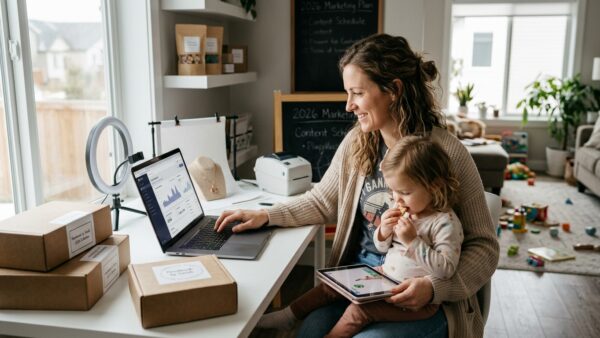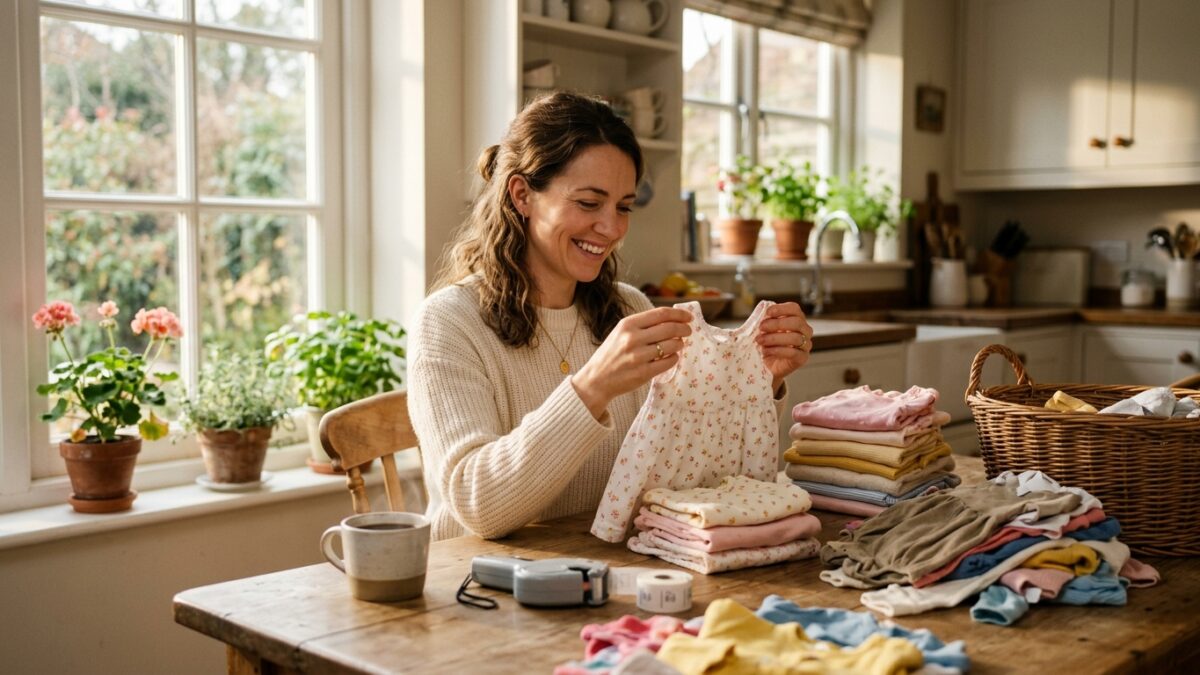
The first Saturday I packed up a folding table, dragged three garbage bags of my kids’ outgrown clothes to the flea market, and came home with $347 in cash — I sat in my car for a full minute just staring at it. That pile of tiny T-shirts and barely-worn sneakers had been sitting in my closet collecting guilt for over a year. Turns out, other parents were happy to pay good money for exactly what I was about to donate for free.
Over the next few months, I kept going back every Saturday. Some weeks I made $200. Some weeks closer to $500. Eventually I had cleared out thousands of dollars from clothes my kids had already forgotten they owned. And ngl — those Saturday mornings at the flea market taught me more about selling, pricing, and understanding buyers than anything I had read online.
If you have kids, you have a closet full of inventory right now. Here’s exactly how to turn it into cash — and what I learned along the way that completely changed how I think about making money.
Just a heads up — some links here are affiliate links. If you grab something through my link, I may earn a small commission at no extra cost to you. I only ever share things I genuinely use or love. ✨
The Closet Situation Every Parent Knows
Kids grow fast. Like, blink-and-they’re-in-the-next-size-up fast. And most of us end up with clothes in every corner of the house — the bag in the hallway that was going to the donation bin, the box in the bedroom that never made it to the car, the stack of things that still have tags on them that somehow never fit right.
The problem isn’t that you’re disorganized. The problem is that nobody told you those clothes are worth real money to somebody else. While you’re feeling guilty about the untouched pile, another parent is at Target spending full price on something you already own in the next size up.
That’s the gap you step into when you start selling. And the flea market is honestly one of the best places to start — no listings to write, no shipping labels, no waiting for a buyer to respond. You show up, you set up, and you sell face to face. It’s straightforward in a way that online selling sometimes isn’t.
Why Kids Clothes Sell So Well (and So Fast)
Kids outgrow clothes in three to six months. Parents know this, which means most of them are not willing to pay full retail for something their child will wear for one season. A $40 pair of jeans from the mall becomes a $10 pair of jeans at the flea market — and for a parent buying three sizes at once for a growing toddler, that math adds up fast.
The categories that move fastest are:
- Sizes 0 to 5T — babies and toddlers outgrow the fastest, so parents buy more frequently in these sizes
- Name brands — Carter’s, Nike, Gap Kids, H&M Kids, and Zara all move quickly at the right price
- Seasonal basics — school uniforms, winter coats, swimwear, and holiday outfits sell reliably every year
- Bundles — grouping five items in the same size for one price always moves faster than individual pieces
You don’t need designer labels or perfect condition. You need clean, wearable, and honestly priced. That’s it. Most parents shopping secondhand already know what they’re looking for — your job is just to make it easy for them to find it.
How to Sort and Price Before You Go
The biggest mistake first-time sellers make is bringing everything in a garbage bag and hoping for the best. A little prep the night before makes the difference between a chaotic morning and a clean, profitable setup.
The Night-Before Sort
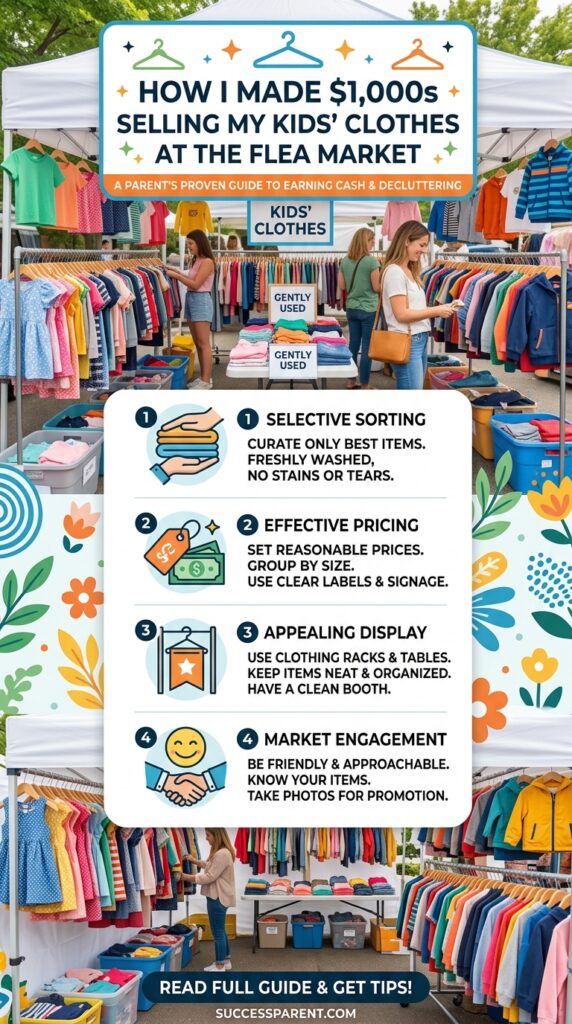
Lay everything out and go through three piles: sell, donate, trash. Anything stained beyond what a wash can fix goes to trash. Anything worn but still functional goes to donate. Everything else is sellable. Then sort what’s left by size. Use paper bags or small boxes labeled 12M, 18M, 2T, 3T, 4T, and so on. Buyers shop by size — if they have to dig through a mixed pile, they’ll move to the next table.
Pricing That Actually Sells
A rough guide that worked for me consistently:
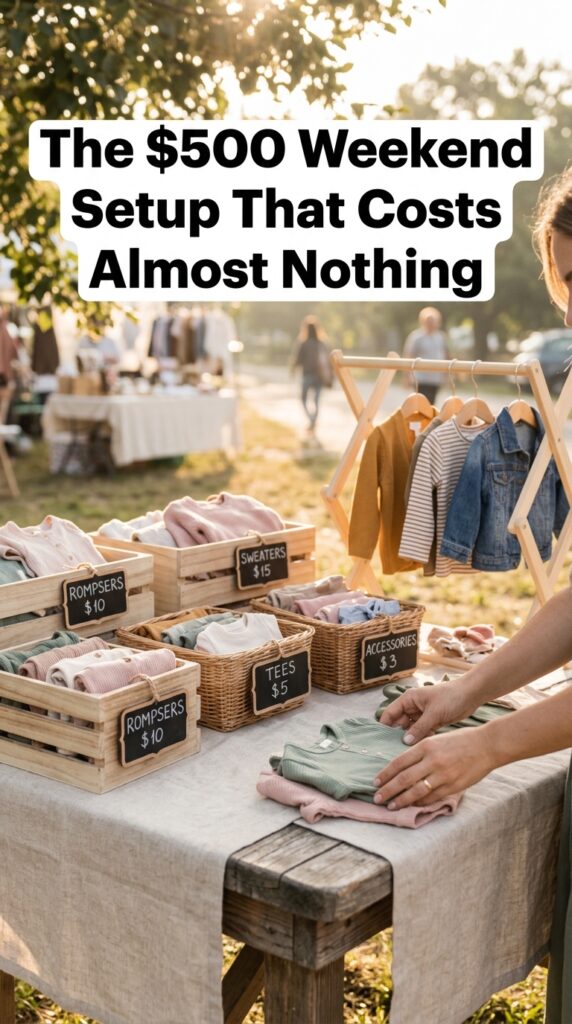
- Everyday basics — $1 to $3 each, or 5 for $10
- Name brand pieces in good condition — $3 to $8 each
- Winter coats and jackets — $5 to $15 depending on brand and condition
- Kids shoes — $3 to $10 depending on brand and how worn they are
- Bundle deals — always offer them, always price slightly lower per item than selling individually
Don’t price high hoping to negotiate down. At the flea market, people decide in about three seconds whether to stop at your table. Clear, fair prices mean faster decisions and more sales. The goal isn’t to squeeze every dollar out of each piece — it’s to move volume and walk away with a full envelope at the end of the morning.
The Flea Market Setup That Gets People to Stop
You don’t need a fancy setup to sell well. What you need is a table that looks organized enough that parents trust you and feel comfortable picking things up. A messy table signals mess throughout — a tidy one signals that the clothes are clean and worth looking at.
Here’s what a solid basic setup looks like:
- A standard folding table — a six-foot table is perfect for a good-sized spread
- A small clothes rack if you have one — hang the nicer pieces because they catch eyes from further away
- Clear bins or baskets labeled by size so buyers can sort themselves without needing you
- A simple sign that says something like “All items priced — bundles available — ask me”
- A cash float — bring $30 in small bills and coins so you can make change easily
- A portable card reader — Square and PayPal Here are both free to set up and take a small percentage per transaction. A lot of buyers don’t carry cash anymore and being able to take card makes a real difference to your total
Show up early. At most flea markets, the serious buyers walk through in the first hour. Being set up and ready when the gates open is where most of the sales happen. The afternoon crowd is lighter and more browsing than buying.
What Happens After You Clear Out the Closet
After a few Saturdays at the flea market, something shifts. You start noticing patterns. Certain brands go fast. Certain sizes always have buyers lined up. You learn how to price quickly, how to read a buyer, how to bundle things so they feel like a deal. These are real skills — and they transfer.
A lot of people use flea market selling as a bridge. You clear out the house, make real cash, and build the confidence that comes from knowing you can sell to a real person standing in front of you. From there, some people move to Facebook Marketplace or eBay for items that can ship. Others start thinking about what they could sell that doesn’t require loading a car at 6am on a Saturday.
That’s honestly where the idea of digital products came in for me. No inventory. No early mornings hauling boxes. No cash float, no card reader, no setup. Just something you create once that sells while you’re doing other things entirely. The flea market gave me the proof that I could sell. Digital products gave me the system that could scale without me being physically present every time.
If you’re curious about that world — creating and selling things online through platforms like Etsy, or through your own website — it’s genuinely more accessible than it looks. And the instinct for what people want, which you build at the flea market table, is exactly what makes digital products work too.
What $1,000s From a Closet Cleanout Can Actually Fund
Here’s what nobody mentions when you start selling old kids’ clothes: the money is real but the bigger win is the mindset shift. When you make $347 cash from things you were about to donate, something genuinely changes. You start looking at everything differently. That pile of books. The kitchen appliances taking up cabinet space. The toys in the garage your kids haven’t touched in two years.
More than that — you realize that income doesn’t have to come from a boss approving your timesheet. It can come from a Saturday morning, a folding table, and clothes your kids already outgrew. That’s a powerful thing to learn about yourself. And it’s a feeling that tends to grow into something bigger.
The women I’ve talked to who started this way used their first flea market money in all kinds of directions. Some funded their first Etsy shop. Some paid for blog hosting or business tools. Some just cleared a bill that month without the usual stress. All of it counted. All of it was real income generated from something they already owned. And it started with three garbage bags and a Saturday.
You Already Have the Inventory — You Just Haven’t Priced It Yet
If your kids have outgrown anything in the last year, you’re sitting on real money right now. Not someday-maybe money. Actual take-it-home-in-an-envelope cash that a parent in your neighborhood would happily pay for.
Start simple. One box of sorted clothes, one folding table, one Saturday morning. Price things fairly, bundle the basics, show up early. The first time you hand someone their bag and they hand you a $20 bill for something you were about to give away, you’ll understand immediately — this is just commerce. And you’re good at it.
If you get curious about what comes next — the part where you build income that doesn’t require loading your car every week — there’s a whole world of digital products that starts from exactly the same place. Whenever you’re ready, that door is open. 🌸
Frequently Asked Questions
How much can you realistically make selling kids clothes at a flea market?
It depends on how much you bring and how well you price it, but most sellers with a full table of kids clothes can expect to make between $150 and $500 on a good Saturday. The more consistently you show up and the more organized your setup, the higher your average tends to go over time. I made more on my fifth Saturday than my first simply because I understood what moved and what didn’t.
Do I need a permit or license to sell at a flea market?
Most established flea markets handle permits at the venue level — you pay a table fee and they cover the rest. Some markets ask for a vendor license if you’re selling regularly as a business, so it’s worth asking the organizer before your first day. For occasional selling of personal items you’ve already purchased, you generally won’t need anything special. When in doubt, call ahead.
What condition do the clothes need to be in to sell?
Clean and wearable is the standard. Small signs of wear are completely expected — parents shopping at flea markets know they’re buying secondhand. What you want to avoid is visible staining, broken zippers, missing buttons, or anything that looks rough on close inspection. When you’re unsure about a piece, wash it one more time and check it in good natural light before pricing it.
Is selling online better than the flea market?
Both have real advantages depending on what you’re after. The flea market means immediate cash with no waiting, no shipping, and no back-and-forth with buyers. Online platforms like Facebook Marketplace, Poshmark, or eBay can get you higher prices on name-brand items but require more time for photography, listings, and shipping. A lot of people start at the flea market and move higher-value individual pieces online once they’re comfortable with the process.
How does flea market selling connect to digital products?
More directly than you’d think. Flea market selling teaches you pricing, buyer psychology, what moves and what doesn’t, and the confidence that comes from completing a real transaction. Digital product selling uses all of those same instincts — just without the physical inventory or the Saturday morning setup. Many people use the cash from physical selling to fund their first digital product tools, which is honestly a smart way to transition from one to the other.
Try PinCraft AI Free Today
Design beautiful Pinterest pins in seconds with AI. Start your free trial — no credit card needed.

Kelly is a blogger and digital entrepreneur passionate about helping people use AI tools to build online businesses from home.