Every parent has lived that moment — it’s 10am, it’s already hot outside, the kids are restless, and the tablet is right there. And look, nobody is judging anyone for screen time. But when you want actual alternatives that don’t require a budget, a trip to the craft store, or a Pinterest board full of activities that take three hours to prep — this list is for you.
These are real activities. The kind that actually work for real kids on real summer days when you also need to get something done. Most of them require nothing more than what you already have at home. And a few of them are the kind your kids will ask to do again — which is honestly the whole point.
Heads up — some links in this post are affiliate links. I may earn a small commission at no extra cost to you if you purchase through my link. I only share things I genuinely believe in. ✨
Why Screen-Free Time Actually Matters This Summer
Kids between ages 8 and 12 currently average around five hours of screen time a day outside of school. That number climbs in summer when structure disappears and devices fill the gap. The research on this is consistent — less screen time correlates with better sleep, longer attention spans, and more creative play. But honestly, you probably already know all of that. What you need is the actual list of things to replace it with. So here it is.
Outdoor Screen-Free Activities (Free and Ready to Go)
1. Backyard obstacle course — Use what you have: pool noodles, hula hoops, jump ropes, sidewalk chalk lines, and lawn chairs. Let the kids design it themselves. Redesigning the course is half the fun and buys you another 20 minutes.
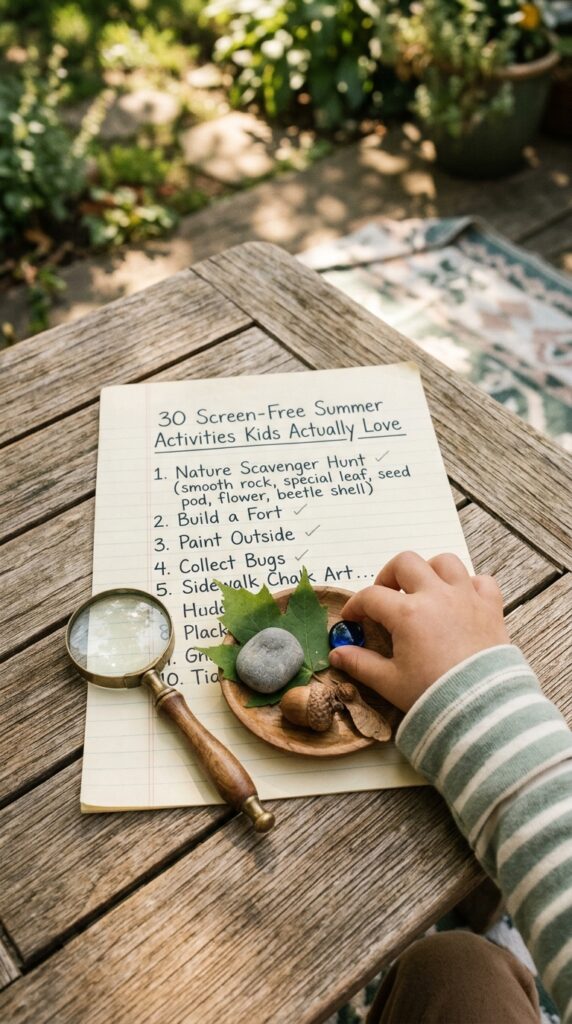
2. Nature scavenger hunt — Write a list on a piece of paper: something red, something that made a sound, a bug, a seed, something smooth. Works in any yard or neighborhood. Kids can make their own lists for each other once they’ve done one round.
3. Chalk art contest — Give each kid a section of sidewalk or driveway and a theme. “Draw your favorite meal.” “Draw what you want to be when you grow up.” “Draw an animal nobody has ever seen before.” Judge nothing. Admire everything.
4. Water balloon target practice — Fill a dozen balloons and draw targets on the fence or a cardboard box. Simple, repeatable, genuinely exhausting for children in the best possible way.
5. Garden helpers — If you have any outdoor plants at all, kids can water, weed, and observe. Give them a specific job and a watering can. Call them the garden manager. They will take it very seriously.
6. Bug hunt and field guide — Give them a notebook. Every bug they find gets drawn, described, and named. Even made-up names count. By the end of summer they’ll have a genuinely impressive little field guide.
7. Ice cube rescue — Freeze small toys inside ice cubes or a large bowl of ice. Give kids tools — spoons, droppers, small cups of warm water — to rescue them. Works especially well for ages two to six and buys a solid 30 minutes.
Indoor Screen-Free Activities for Hot Days
8. Fort building championship — Blankets, couch cushions, chairs, and clips. Declare it a building competition and let them spend the morning constructing. Award points for creativity, structural stability, and interior design.
9. Story dice game — Write six words on separate pieces of paper, fold them up, and put them in a cup. Each person draws three and has to tell a story using all three words. Gets surprisingly creative very fast.
10. DIY puzzle — Draw or print a picture, glue it to cardboard, let it dry, then cut it into pieces. Trade puzzles with a sibling. The making is half the activity and the solving is the other half.
11. Indoor cooking challenge — Give each child a handful of ingredients and five minutes to make something. Could be a snack, a sandwich construction, a “fancy plate.” Judge on presentation and creativity, not taste.
12. Letter writing — To a grandparent, a friend, a pen pal they’ve never met. Give them stamps. There is something genuinely special about a child receiving a letter back in the mail — and it gives them a reason to write again.
13. Cardboard city — Save cereal boxes, tissue boxes, paper towel rolls. Set them out with tape, markers, and scissors. Challenge: build a city, a zoo, a spaceship, a school. No limit on time.
14. Learn a skill together — Origami, simple knitting, friendship bracelets, card tricks. Pick one, learn it from a library book or a printed instruction sheet, and practice it until someone can teach it to someone else.
Creative and Learning Activities
15. Summer journal — One entry per day, minimum one sentence. Can be words, drawings, or both. By September they’ll have a genuine record of their summer that most adults never thought to keep as kids.
16. Mini lemonade stand — Give them $3 for supplies, help them make a sign, and let them handle the whole operation. This is legitimately one of the best early business and math lessons available, and it costs almost nothing.
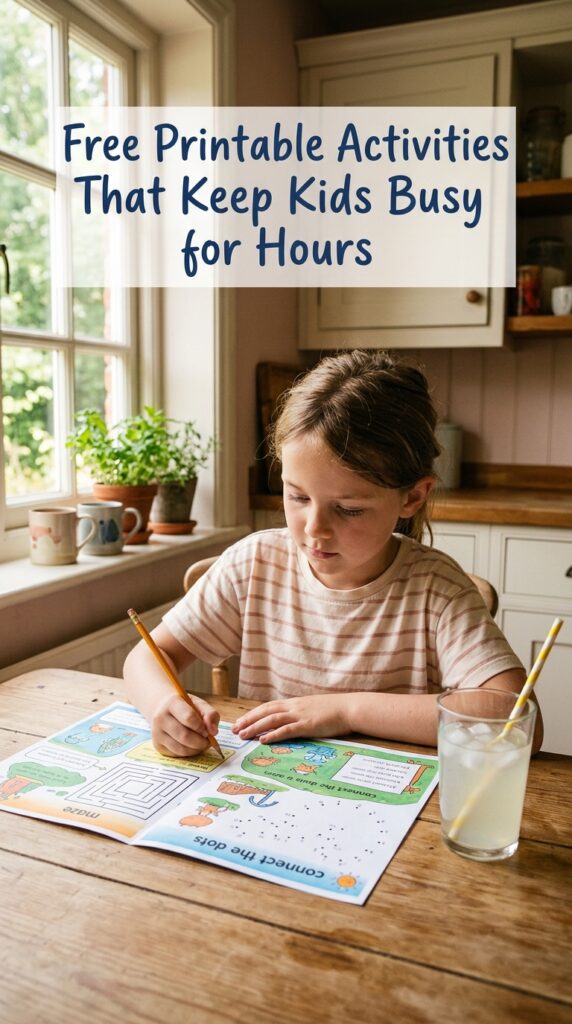
17. Printable activity packs — Word searches, crosswords, mazes, coloring pages, and creative writing prompts. These work for quiet time, rainy days, and the hour after lunch when everyone needs to settle. Kids’ educational activity worksheets are one of the most consistent sellers on Etsy for a reason — parents genuinely use them.
18. Shadow tracing — Take paper outside in the morning, trace shadows of objects, then go back in the afternoon and trace the same objects again. Compare the differences. Genuinely teaches something about light without feeling like a lesson.
19. Sidewalk chef — Mud kitchen, water, sand, leaves, and grass. Let younger kids mix, pour, and “cook” for as long as they want. Messy, imaginative, and completely free.
20. Family talent show — Everyone prepares one thing. It can be a joke, a dance, a magic trick, a song, a made-up poem. Low pressure, high entertainment. Schedule it for after dinner and everyone has something to look forward to all day.
Activities That Keep Working All Summer
21. Summer reading challenge — One book per week, pick a small reward for completing it (choosing dinner, picking the movie, staying up 15 minutes later). Library books are free and most libraries have their own summer reading programs with prizes.
22. Weekly baking project — One recipe per week, kids help with measuring and mixing. Gradually give them more independence. By the end of summer a lot of kids can make a basic recipe start to finish.
23. The kindness challenge — A list of one kind thing per day: draw a picture for a neighbor, hold a door, write a note to a teacher. Keeps kids thinking outward and gives summer a sense of purpose beyond entertainment.
24. Morning stretch routine — Five minutes of stretching or yoga together before the day starts. There are good free printable cards for kids’ yoga poses that make this fun rather than forced.
25. Interview a grandparent — Give kids a list of questions to ask an older relative — what was school like, what did you eat for lunch, what did you play — and let them record the answers in a notebook or on a voice memo. These become genuinely precious over time.
Five More Ideas When You Need Them
26. Tie-dye old white shirts — Rubber bands, food coloring, and an old plastic bag. Works on white socks too. The results are always good and kids wear them all summer with genuine pride.
27. DIY board game — Cardboard, markers, a dice, and small objects as tokens. Give them a theme and let them invent the rules. Playing each other’s games takes another full afternoon.
28. Cloud watching journal — Lie outside, look up, describe what you see. Draw it. Do it once a week and compare entries. Quieter kids especially love this.
29. Neighborhood map — Walk a few blocks and draw a map of what you pass. Add details over time. Makes walks more interesting and gives kids a sense of their own geography.
30. Countdown to school — Make a paper chain with one link for each day left of summer. Tear one off each morning. Gives the summer shape and makes kids feel like they’re in on the schedule rather than just waiting for it to end.
Frequently Asked Questions
What are the best screen-free summer activities for kids ages 5 to 10?
The activities that work best across that age range are ones kids have some control over — building things, creating things, and playing games with rules they understand. Obstacle courses, fort building, scavenger hunts, chalk art, and cooking challenges all work well. Printable activity sheets also span this age range well because you can choose the difficulty level.
How do you keep kids screen-free without fighting about it?
Give screens a scheduled time rather than fighting about them all day. “Screens start at 3pm” or “screens after lunch” removes the negotiation from every single interaction. When kids know when screen time is coming, they’re generally more willing to do other things in the meantime. Having a visible activity list helps too — pointing to it beats thinking on the spot every time.
What can kids do at home in summer when they say they’re bored?
Boredom is actually useful — it’s where creativity starts. But if you want to give them a push, the best single thing is a choice list they can refer to themselves. Print out ten to fifteen options and let them pick. The act of choosing reduces the resistance significantly. Making it their decision instead of yours changes the whole dynamic.
Are printable activity packs worth using for screen-free summer time?
Genuinely yes — especially for quiet time, rainy days, and the after-lunch lull when everyone needs to reset. Good printable packs include a mix of word puzzles, drawing prompts, mazes, and creative writing — enough variety that kids can pick what appeals to them. They’re especially useful for ages six through twelve when kids want something to actually do rather than pure open play.
How much screen-free time is realistic in summer?
The American Academy of Pediatrics recommends no more than two hours of recreational screen time per day for children six and older — which means roughly six to eight hours of non-screen time during waking hours. That sounds like a lot, but a mix of outdoor play, creative projects, reading, and one or two structured activities can fill that time without feeling like you’re running a summer camp. The goal is rhythm, not perfection.
Try PinCraft AI Free Today
Design beautiful Pinterest pins in seconds with AI. Start your free trial — no credit card needed.

Helping creators use AI tools and Pinterest to build digital product income from home.