Just so you know — some links in this post are affiliate links. I may earn a small commission at no extra cost to you if you purchase through my link. ✨
⚡ Quick Answer
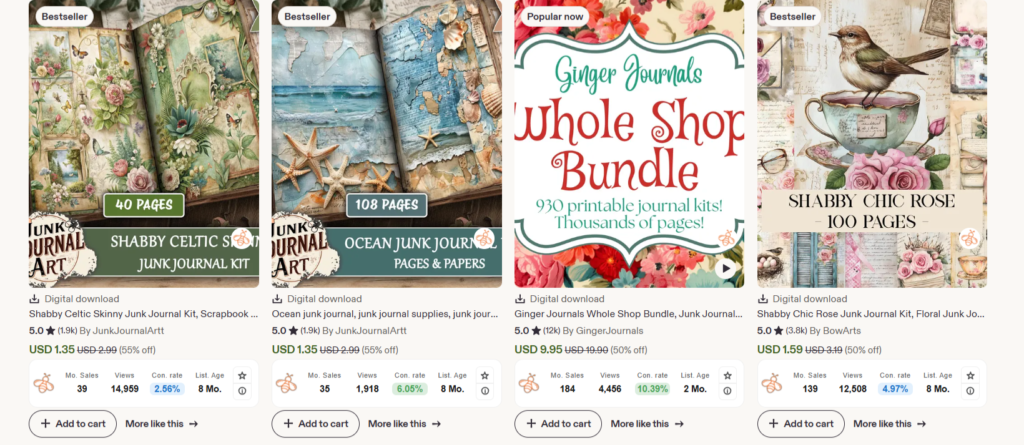
A junk journal is a handmade or digital book assembled from layered vintage materials — aged paper, pressed flowers, botanical illustrations, antique ephemera. They sell as printable digital kits on Etsy, where active sellers average 57 sales per month and top listings generate over $4,000 monthly from a single product.
Every few weeks, someone finds junk journaling for the first time and their reaction is the same: why have I never heard of this?
They’ve been scrolling Pinterest, watching the same layered vintage pages — pressed flowers over aged maps, botanical illustrations on linen paper, candlelit dark academia spreads — and wondering what they are and who makes them.
This post answers all of it: what a junk journal actually is, what the point of one is, and how to turn the creative side into a real income stream.
What is a junk journal?
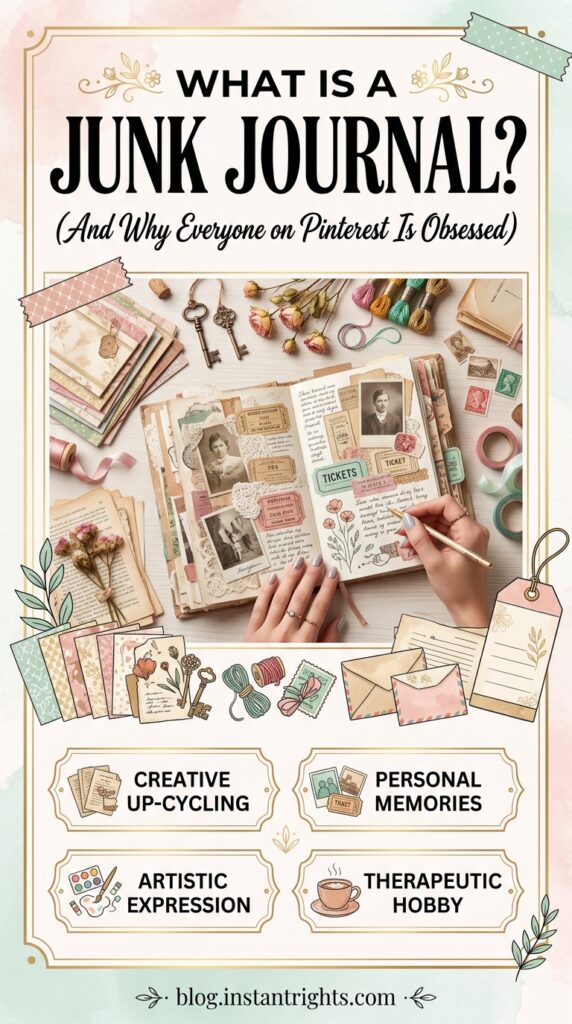
A junk journal is a handmade or digitally assembled book built from collected, layered, and repurposed materials. The word “junk” comes from the original tradition of using anything available — cereal boxes, old envelopes, worn book pages — and transforming them into beautiful journal pages.
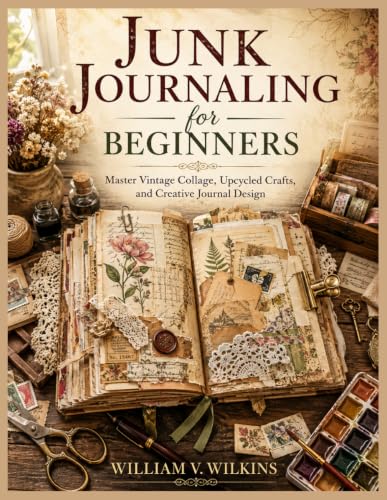
Done well, a junk journal looks like something from a Victorian curiosity shop. Worn leather covers, aged parchment, pressed botanical specimens, handwritten correspondence fragments, and antique stamps all layered into something that feels collected over decades rather than assembled in an afternoon. It’s part scrapbook, part art journal, part memory keeper — and entirely your own.
What’s the actual point?
This is the most searched question about junk journals and deserves a real answer. On the surface it can look like a lot of effort for something that doesn’t “do” anything specific.
- Creative expression without pressure. There’s no wrong way to make a junk journal — enormously freeing for people who don’t consider themselves artistic.
- A form of slow living. Collecting, sorting, and layering materials is meditative and screen-free in a way that resonates deeply right now.
- Ownership of beautiful things. You don’t just consume the aesthetic — you create it.
- Community. The junk journaling community on Pinterest and YouTube is warm, generous, and creatively supportive.
For anyone thinking about the income side: people pay real money for beautiful junk journal pages they didn’t have to make themselves.
What goes inside a junk journal?
- Background papers — aged textures, vintage maps, botanical prints. The base layer everything else sits on.
- Writing pages — lined or blank with decorative borders, for actual journaling.
- Pocket pages — folded pockets and envelopes to tuck in ephemera and notes.
- Illustration pages — botanical drawings, Victorian engravings, celestial charts. The “wow” pages buyers love most.
- Ephemera sheets — small clippings, tags, labels, stamps to cut out and use as decoration.
- A cover page — sets the entire aesthetic tone. This is what sells the kit in the Etsy thumbnail.
Physical junk journals vs digital kits
Physical junk journals are handmade objects — real paper, real glue, found materials. Dedicated makers sell them for $30–$150+ on Etsy. Genuine craft objects, but the time-per-sale economics are demanding.
Digital junk journal kits are printable PDF collections. Buyers download, print at home, and assemble into their own journals, or use digitally in GoodNotes or Notability. Once created, they sell indefinitely with zero additional work — which is why the digital side of the market is growing so fast.
For creating digital pages, the Junk Journal Prompt Generator builds AI image prompts for any theme with one click — 30+ aesthetics, 12 settings, commercial-use ready.
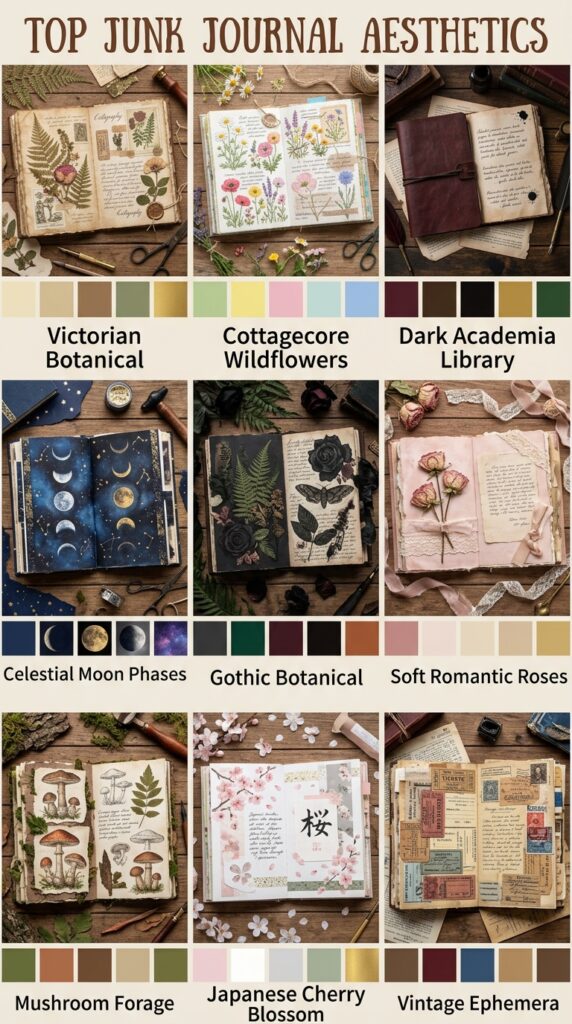
The most popular aesthetics
- Vintage and Victorian — aged paper, botanical illustrations, pressed flowers, antique correspondence
- Cottagecore — wildflowers, herbs, cottage kitchens, pastoral warmth
- Dark academia — libraries, candlelight, manuscripts, autumn leaves. Above-average prices.
- Celestial — moon phases, star charts, constellations, gold on navy. Crosses multiple buyer communities.
- Botanical — scientific and watercolour plant illustration. Most consistently searched on Pinterest year-round.
- Gothic — black roses, poison plants, Victorian mourning, dramatic shadows. Premium pricing territory.


How to turn junk journal making into income
Most sellers start on Etsy — built-in traffic, existing buyer community. It’s the right starting point. But Etsy takes a 6.5% transaction fee plus listing fees, and you’re building on someone else’s platform.
The sellers doing best long-term combine Etsy with their own platform. Own-platform options:
- Gumroad — no monthly fee, 10% cut, extremely easy to set up
- Payhip — free plan with 5% fee, or paid plans with zero fees
- Stan Store — popular with creators, clean storefront
- Your own website — Hostinger’s AI website builder creates a complete storefront in under an hour, no coding needed. Full control, zero platform fees beyond hosting costs.
Traffic to both platforms can come from Pinterest. PinCraft AI simplifies the process by generating Pinterest pin graphics, titles, descriptions, and SEO keywords from your product pages in just a few clicks, making it easier to create content and upload it directly to Pinterest.
The blog strategy amplifies everything. Write posts covering junk journal ideas, tutorials, and aesthetic guides — Claude AI is built for this kind of content writing, producing complete well-structured posts from your ideas and product information quickly. Each post brings in search traffic month after month. Promote every post on Pinterest with PinCraft AI and you have a compounding traffic flywheel: blog drives search traffic, Pinterest amplifies it, your platform captures the revenue.
Download the free Pinterest Viral Blueprint for my exact strategy for reaching 1.7M monthly views.
Frequently asked questions
What is the difference between a junk journal and a regular journal?
A regular journal is a blank or lined notebook for writing. A junk journal is an art object assembled from layered vintage materials — aged papers, ephemera, botanical illustrations, fabric scraps, pressed flowers. You can write in a junk journal, but many people use them as creative scrapbooks, memory keepers, or collect the pages purely for the aesthetic.
Are junk journal kits worth buying on Etsy?
Yes, if you’re buying from a seller with good reviews and clear product photos showing all the pages. Digital junk journal kits typically include 20–50 printable pages for $3–$15. Check that the listing specifies it’s a digital download and comes as a high-resolution PDF at 300 DPI minimum.
Can I sell junk journal pages I made with AI?
Yes, with the right tools. Adobe Firefly is commercially licensed on all plans — everything generated is safe to sell. Midjourney requires a Pro plan or above for commercial rights. DALL-E via ChatGPT paid tier includes commercial use. Always confirm your specific tool’s current terms before listing.
How much do junk journal sellers make on Etsy?
Based on current EverBee market data, active digital junk journal listings average around 57 sales per month and $434 monthly revenue. Top listings generate $3,000–$4,000+ monthly from a single product. New sellers with well-optimised listings and Pinterest traffic typically see first sales within 3–6 weeks. Average conversion rate is 5.4% — more than double the typical Etsy average.
Do I need design skills to make junk journal kits?
No. AI image tools like Adobe Firefly, Midjourney, and even Canva AI can generate junk journal pages from simple text prompts. The Junk Journal Prompt Generator automatically creates those prompts for you, so you don’t have to figure out what to write yourself. You can then use Canva to arrange your images, add page elements, and export everything as printable PDFs. No illustration skills, Photoshop, or design experience needed.
What’s the best platform to sell junk journals besides Etsy?
For digital kits, Gumroad and Payhip are the easiest own-platform options — no monthly fee, set up in under an hour. Stan Store is popular with content creators. For a full website, Hostinger’s AI website builder creates a complete store quickly with no coding. Selling on your own platform means keeping more of every sale — no 6.5% Etsy transaction fee.
Final thoughts
Junk journaling sits at the intersection of creativity, nostalgia, and digital business — which is exactly why it continues growing on platforms like Etsy and Pinterest. What once started as a handmade hobby built from scraps and vintage finds has evolved into a thriving digital product niche with real income potential.
The best part is that you no longer need advanced art skills, expensive software, or years of design experience to get started. AI tools can help generate beautiful vintage-inspired pages, Canva makes formatting simple, and Pinterest gives creators a free traffic source that can continue bringing in visitors long after a product is published.
Whether you want a calming creative hobby, a side income stream, or a full digital product business, junk journals offer a surprisingly accessible place to begin. Start with one theme, create a small printable kit, publish it consistently, and let your style evolve over time. One good design can continue selling for months — sometimes years — after you create it.
Try PinCraft AI Free Today
Design beautiful Pinterest pins in seconds with AI. Start your free trial — no credit card needed.

Helping creators use AI tools and Pinterest to build digital product income from home.