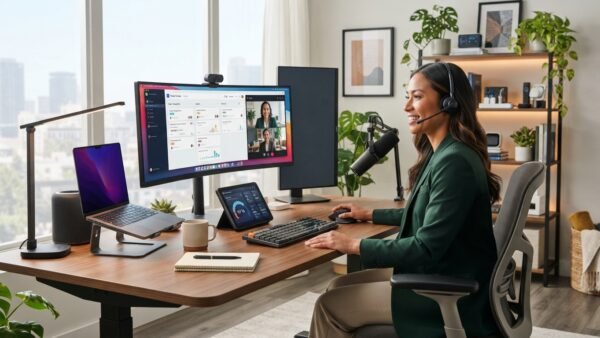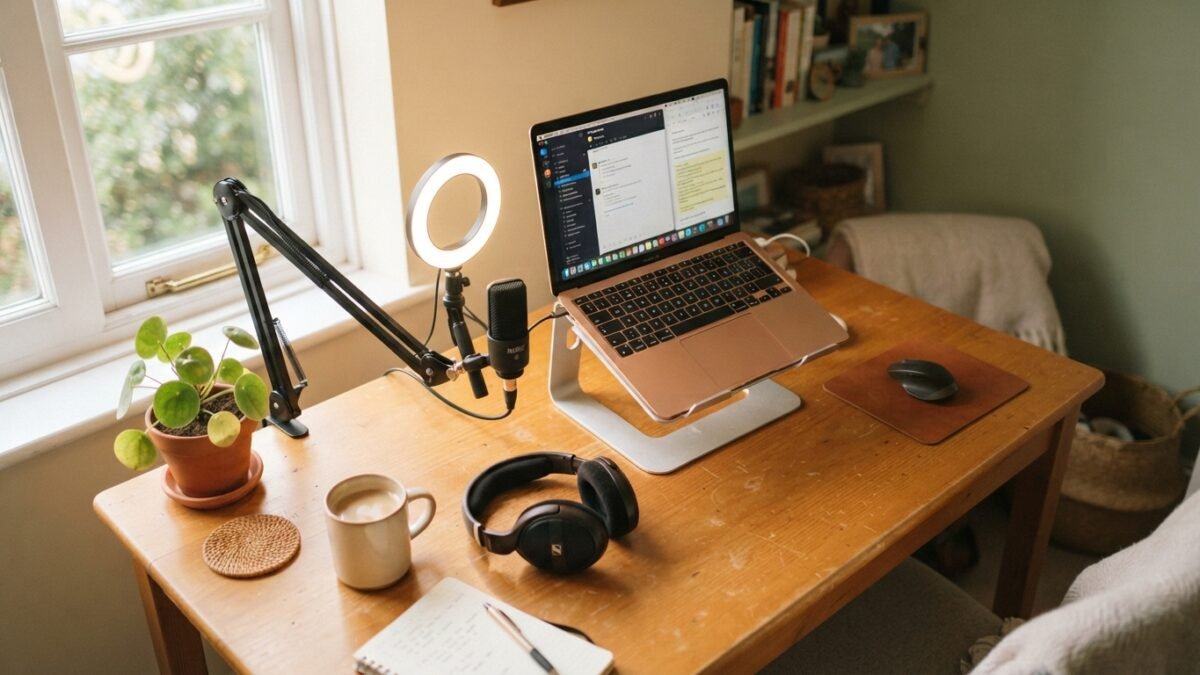
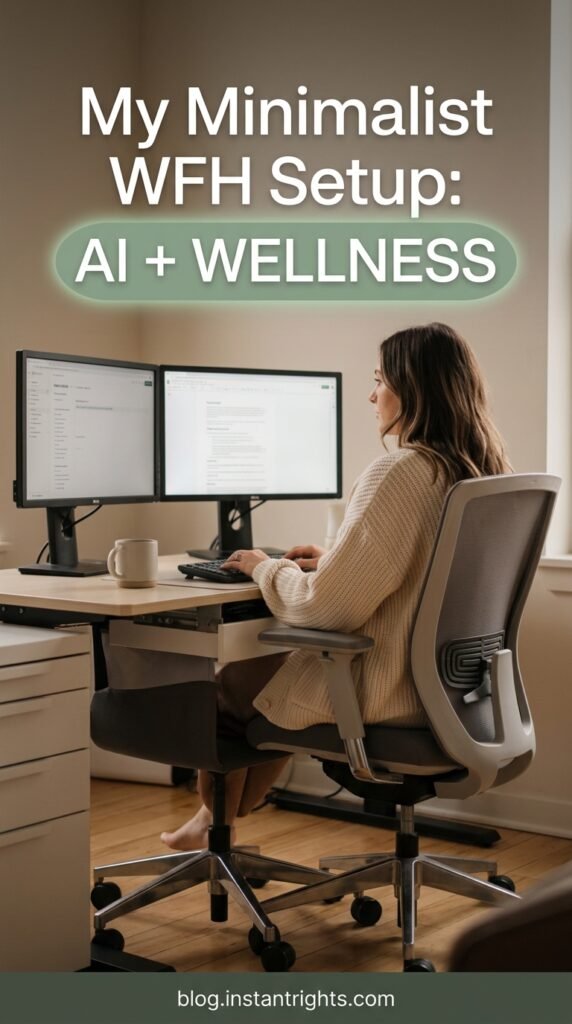
People assume running an online business out of my house means I’ve got some elaborate studio situation going on. I really don’t. My actual setup is a handful of desk pieces that stop my neck from hurting by 3pm, plus a small stack of AI tools that do most of the heavy lifting on the content and product side.
It took me way longer than it should have to figure out which physical pieces actually mattered versus which ones were just aesthetic Pinterest bait. And on the software side, I went through a lot of tools that promised more than they delivered before landing on the small handful I actually open every day.
So here’s the honest breakdown — desk setup first, AI tools second — of what’s actually earning its place in my workspace right now.
Why Most “Home Office Setup” Advice Doesn’t Fit a Solo Business
If you’ve searched “home office setup” before, you’ve probably landed on lists built for corporate remote workers, not someone actually running their own thing. Ring lights and mics for content, a setup that can handle recording and creating, not just Zoom calls — that’s a genuinely different list.
You’ve also probably felt like you needed everything at once before your setup would feel “legit.” I definitely felt that early on, and it’s honestly not true — most of what actually matters is a small handful of pieces, not a full studio buildout.
Here’s the thing though — once you know which pieces actually earn their keep, the list gets a lot shorter and a lot more affordable.
The Desk Pieces That Actually Matter
These are the physical pieces I reach for daily, not the ones sitting decorative and unused:
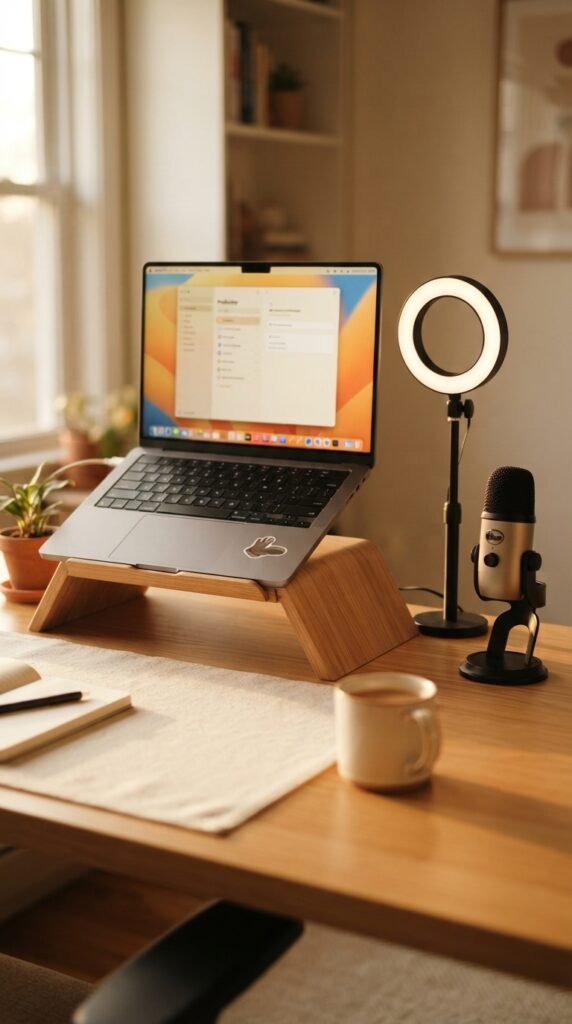
- A laptop stand — genuinely the single biggest change for neck and shoulder strain during long work sessions [Amazon affiliate link — insert your chosen laptop stand product here]
- A basic microphone — worth it the moment you start making any kind of video or voiceover content [Amazon affiliate link — insert your chosen mic here]
- A small webcam — built-in laptop cameras are rough in low light, a dedicated one fixes that instantly [Amazon affiliate link — insert your chosen webcam here]
- A compact ring light — the cheapest fix for looking noticeably more put-together on camera [Amazon affiliate link — insert your chosen ring light here]
- Comfortable headphones — for calls, but also just for focus during long content sessions [Amazon affiliate link — insert your chosen headphones here]
The AI Tools Actually Doing the Work
This is where the real time-saving happens. My actual day-to-day AI stack is smaller than people expect — a couple of tools doing very specific, repeatable jobs rather than a dozen apps I barely open.
For Pinterest content specifically, I use PinCraft AI to batch-generate titles, SEO descriptions, and image prompts instead of writing every pin caption from scratch. For anyone wanting to build their own sellable AI tool the way I built my Junk Journal Prompt Generator and Sticker Prompt Studio, Sell Your First AI Tool — Studio is the guided system I used for both, no coding required.
“Do I Really Need Paid Tools to Get Started?”
Not at day one, honestly. Free tiers of most AI tools cover the basics while you’re figuring out your workflow. The paid tools earn their spot once you notice yourself doing the same repetitive task by hand every week — that’s the actual signal it’s time to upgrade, not a fixed timeline.
Software Tools Beyond the AI Stack
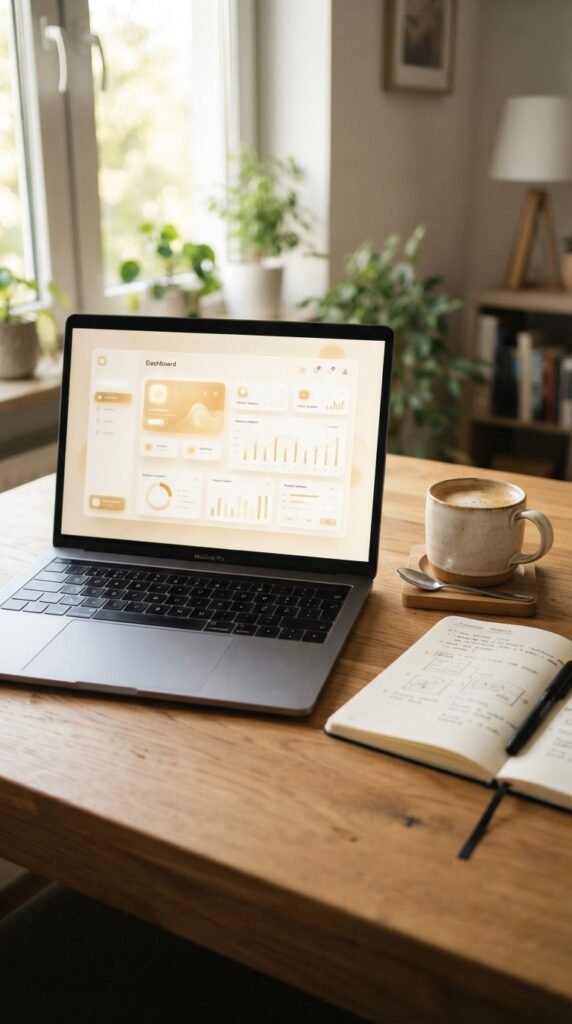
A few other subscriptions round out the actual business side — email marketing for list-building, a design tool for visuals, and basic keyword research for SEO. [Awin/ShareASale affiliate link — insert your approved email marketing platform program here] and [Awin/ShareASale affiliate link — insert your approved design tool program here] are the two I’d point people toward first if they’re just getting their software stack started.
These are also the tools most likely to run recurring commissions if you’re promoting them, since they’re subscription-based rather than one-time purchases — worth checking your Awin and ShareASale dashboards for the specific platforms you personally use.
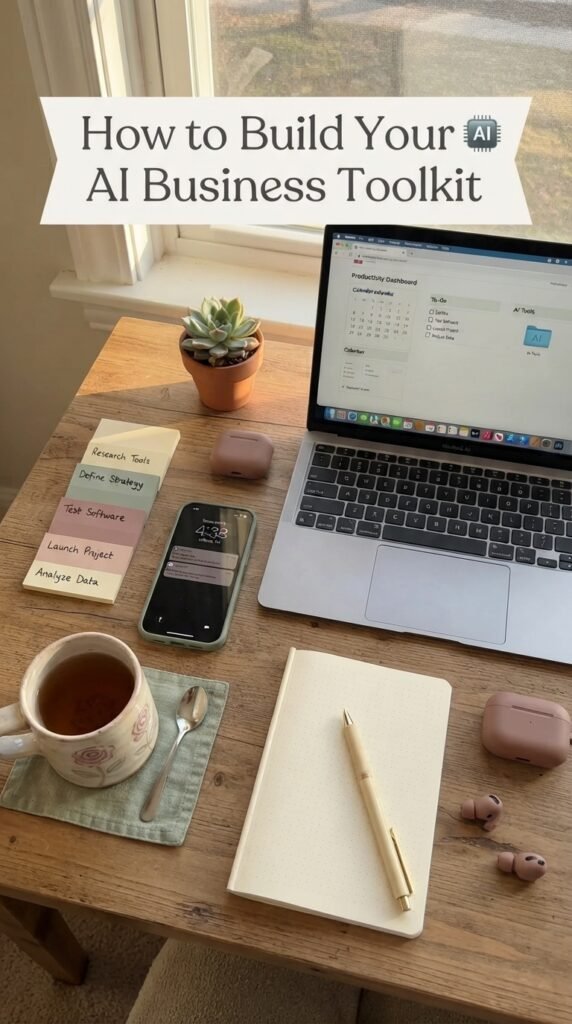
What a Trimmed-Down Setup Actually Feels Like
Picture sitting down to work and everything you reach for actually gets used — no decorative gadgets, no forgotten subscriptions quietly draining your card each month. That’s genuinely the shift once you trim a setup down to what’s earning its place.
My actual desk is smaller and less “impressive” looking than a lot of the setups I see online, and it does more real work than any of those ever could, because every piece on it has an actual job.
Build Yours Piece by Piece, Not All at Once
You now know the real shortlist here: a handful of desk pieces that solve actual physical problems, and a small AI toolkit doing specific repeatable jobs rather than a dozen half-used apps.
Start with whichever piece solves your biggest current annoyance — probably the laptop stand if your neck’s been complaining. And if you’re ready to build your own AI tool the way I built mine, Sell Your First AI Tool — Studio is exactly where I’d point you next. No rush — piece by piece works just fine. ✨
❓ Frequently Asked Questions
What’s the most important piece of equipment for a home AI business?
A laptop stand tends to make the biggest daily difference, since it directly affects physical comfort during long work sessions, more than any single software tool does.
Do I need expensive equipment to start creating content?
No — a basic mic, webcam, and small ring light cover most beginner content needs without a large upfront investment.
How many AI tools should I actually be using?
Fewer than you’d think. A small handful of tools each doing one specific, repeatable job tends to be more useful than a large stack of half-used subscriptions.
Should I pay for AI tools right away or start with free versions?
Start free. Upgrade once you notice yourself repeating the same manual task weekly — that’s the actual signal a paid tool is worth it, not a fixed timeline.
How do I know if a software subscription is actually worth keeping?
Ask what specific task it replaces. If you can’t name one clearly, it’s probably not earning its place in your monthly budget yet.
Try PinCraft AI Free Today
Design beautiful Pinterest pins in seconds with AI. Start your free trial — no credit card needed.

Helping creators use AI tools and Pinterest to build digital product income from home.