Pinterest Pays — And You Don’t Have to Be Famous to Collect
Somewhere between your third scroll session this week, a pin probably showed up in your feed from someone you’ve never heard of — and it had 47,000 saves. No face, no followers you recognized, no personal brand. Just a clean graphic, a strong headline, and a link that led to something worth buying.
That’s Pinterest in a nutshell, honestly. It’s one of the few platforms left where a total beginner can put something up on a Monday and have it discovered by thousands of people by Friday — no audience required, no dancing for the algorithm, no camera anxiety.
If you’ve been lurking on the idea of earning money online but the “build your personal brand” advice makes you want to close every tab — you’re going to want to read this. Faceless Pinterest income is very real, very doable, and a lot of people are quietly making it work right now while most of the internet doesn’t even know this niche exists.
Below are 10 actual ways to earn from Pinterest without ever putting your face on the internet — from selling digital downloads to building tiny apps people pay for on repeat.
Just so you know — some links in this post are affiliate links. If you grab something through my link, I may earn a small commission at no extra cost to you. I only ever share things I genuinely use or love. ✨
Why Most Beginners Quit Pinterest Before It Gets Good
Here’s a scenario that probably sounds familiar: you set up a Pinterest account, posted a few pins, waited a couple of weeks, saw basically no traffic, and quietly closed the tab. Maybe you told yourself Pinterest “doesn’t work anymore” or that you’d missed the window.
Ngl — that’s almost everybody’s first chapter. And it makes complete sense, because nobody told you the one thing that actually matters: Pinterest is a search engine, not a social media platform. Your pins are content that compounds over months, not posts that expire in 48 hours. The people making real money here aren’t going viral — they’re being consistently found.
The second problem? Most beginners try to do everything manually. Writing unique descriptions for every pin. Designing each graphic from scratch. Keeping track of which links they’ve pinned already so they don’t trigger spam filters. It’s exhausting before it ever becomes profitable.
Here’s the thing though — none of that has to be your story. The 10 ideas below are specifically chosen because they work with Pinterest’s search-engine nature, not against it. And several of them are built for the creator who wants to make something once and earn from it many times over.
10 Faceless Pinterest Income Ideas You Can Start This Week
1. Sell Printable Digital Downloads on Etsy or Gumroad
This is probably the most talked-about Pinterest income stream — and it’s talked about a lot because it genuinely works. Printables are digital files (think: budget trackers, meal planners, wedding checklists, classroom posters) that a buyer pays for and instantly downloads. You make the file once.
Pinterest is basically built for printables. Someone searches “weekly meal plan template free” or “kindergarten morning routine chart,” they find your pin, they click through, and they buy. The whole funnel takes maybe four minutes from first impression to sale notification.
Getting started is quicker than most people expect:
- Choose a niche — teachers, brides, budget nerds, parents, fitness people.
- Create 3–5 designs in Canva (free version works fine to start).
- List on Etsy or Gumroad with keyword-optimized titles and descriptions.
- Create Pinterest pins for each product — portrait format, text overlay, strong headline.
The sellers making consistent passive income here are the ones who treat their Pinterest account like an SEO machine, not a social profile.
✨ FRIEND TIP:
When you’re naming your Etsy listing AND your Pinterest pin title, use the exact phrase your customer would type into Google — not the cute name you want to call it. “Printable Weekly Budget Tracker” will always outperform “The Monday Method Planner.”
2. Sell Educational Worksheets for Teachers and Parents
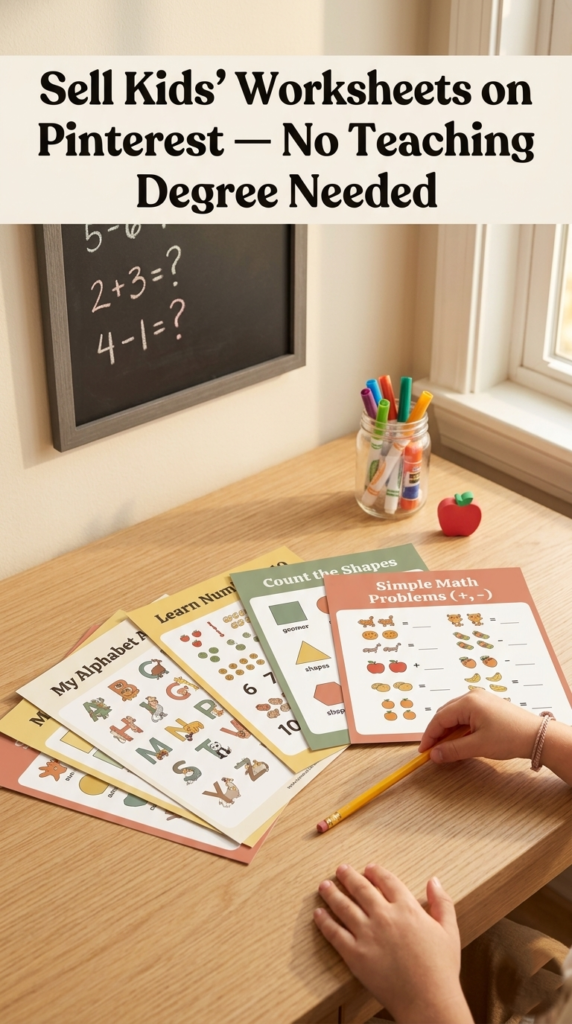
Okay, this one is worth its own section because the numbers are genuinely surprising. Educational worksheets — the kind teachers use in classrooms and parents print for home learning — are some of the most searched and most purchased digital products on the entire internet.
Teachers Pay Teachers alone has processed billions in transactions. And the people winning in this niche aren’t always former teachers — they’re people who found a smart way to create and distribute worksheets at scale.
The part that slows most people down is the creation side. Designing a full set of math practice sheets or reading comprehension activities from scratch in Canva takes hours. But there are tools built specifically for this — one I’ve been genuinely impressed by is the Kids’ Educational Activity Worksheet Generator at instantrights.com. You can generate complete, curriculum-aligned worksheet sets without starting from a blank page.
From there, pin each worksheet pack to subject-specific Pinterest boards — “2nd grade math activities,” “kindergarten tracing worksheets,” “free printable reading comprehension” — and let Pinterest’s search traffic do the heavy lifting.
3. Build an Affiliate Marketing Pinterest Account
Affiliate marketing through Pinterest is one of the cleanest faceless income models out there. You pin content that links to products you love — and when someone buys through your link, you earn a commission. No product creation, no customer service, no inventory.
The key is treating Pinterest like the search engine it is. Instead of randomly pinning things you like, you research what people are actively searching for in your niche — “best planners for ADHD,” “home office setup under $300,” “teacher gifts under $20” — and create pins that show up for those searches.
What makes Pinterest uniquely good for affiliate marketing:
- Pins have a much longer lifespan than Instagram or TikTok posts (months to years, not hours)
- Search intent is already high — people are literally looking for recommendations
- You can link directly to affiliate products from most pins
- Niche boards build authority over time without you needing a personal following
Good affiliate programs for beginners: Amazon Associates, ShareASale, Impact, LTK, and niche-specific programs in your category.
4. Drive Traffic to a Blog That Earns Passively
This is the model a lot of the quiet earners use — write blog posts optimized for Google AND Pinterest, then use Pinterest to drive consistent traffic to those posts. The blog monetizes with affiliate links, display ads (like Mediavine or Raptive once you hit traffic thresholds), and digital product recommendations.
The beautiful part of this combo is that it compounds in two directions: Google ranks your blog posts over time, and Pinterest keeps surfacing your pins to new audiences. A post you wrote eight months ago can still be your best traffic source today.
You don’t need to be a writer to make this work — you need to be helpful, specific, and consistent. Pick one niche, write 15–20 solid posts, and give Pinterest the pins it needs to send people there.
✨ FRIEND TIP:
Write your blog post titles the same way you’d write a Pinterest pin headline — specific, benefit-driven, and searchable. “How I Made $400 This Month Selling Printables on Etsy” will always get more clicks than “My Passive Income Journey Update.”
5. Create and Sell Canva Templates
Canva template shops have become one of the most popular digital product niches — and Pinterest is one of their biggest traffic drivers. People search for “Canva Instagram templates,” “Pinterest pin templates Canva,” “media kit template Canva” constantly.
You design the template once in Canva, list it on Etsy or Gumroad as a shareable Canva link, and every sale delivers automatically. No shipping, no printing, no overhead.
Hot Canva template niches right now: Pinterest pin templates, Instagram story packs, lead magnet covers, e-book layouts, media kits for influencers, and wedding invitation suites.
6. Share a Free Lead Magnet and Build an Email List That Pays
This one is slightly different — you’re not selling a product directly, you’re giving something away for free and building an email list in the process. But it’s on this list because the back-end income potential is serious.
Your free lead magnet is essentially a high-value resource — a guide, a checklist, a mini-course, a swipe file — that someone trades their email address for. Once they’re on your list, you can promote products, digital downloads, and affiliate offers over and over again.
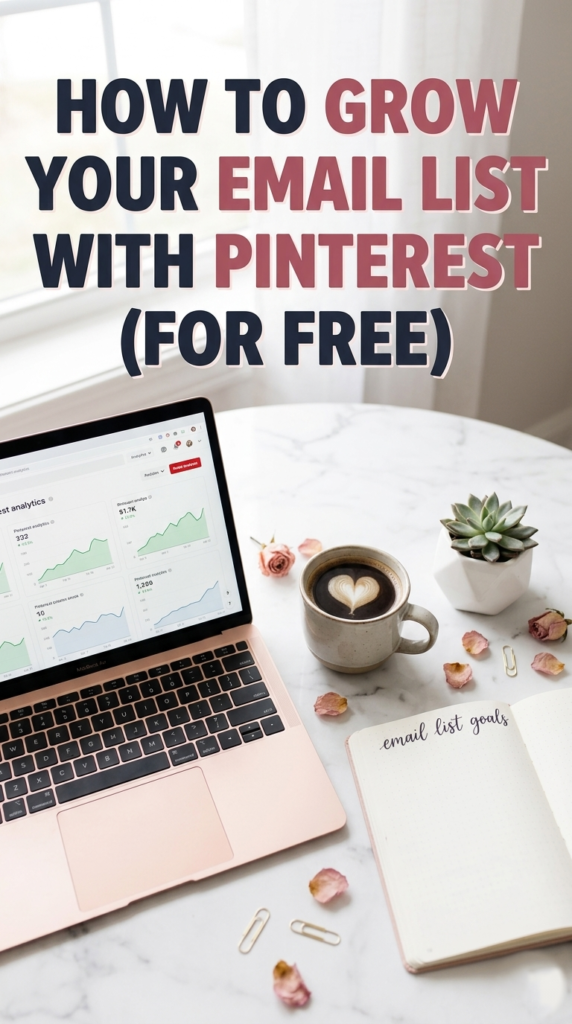
Pinterest is one of the best free traffic sources for growing an email list, because the intent is already high and pins get saved and recirculated long after you post them.
If you’re trying to grow your Pinterest and monetization strategy at the same time, the 2026 Pinterest Viral Blueprint is a free resource worth grabbing — it covers exactly how to set up pins that build both traffic and list growth together.
7. Build and Sell Mini Apps — The Hottest Digital Product of 2026
Hot take: mini apps are quietly becoming one of the most profitable digital products you can sell right now — and almost nobody in the Pinterest space is talking about it yet. That’s your window.
A mini app is exactly what it sounds like: a small, focused, single-purpose web tool that solves one specific problem for a specific type of person. Think a meal cost calculator for families on a budget, a classroom behavior tracker for teachers, a habit-streak counter for wellness creators, or a wedding guest list organizer. They’re not full software products. They’re lightweight, useful, and people are genuinely willing to pay for them.
What makes mini apps such a strong Pinterest income play:
- They’re highly pinnable — a clean screenshot of a useful tool with a bold “Download this free budget tracker” overlay gets saved constantly
- The perceived value is high — people pay $7 to $47 for a well-designed tool that solves a specific problem, without blinking
- You can build them without coding — AI tools have made this genuinely accessible to non-technical creators
- They’re evergreen — a good mini app keeps selling for years without needing updates
If you want to understand the full scope of what’s possible here, this breakdown of what mini apps are as a digital product is one of the clearest explainers I’ve come across — worth a read before you start. And if you’re looking for product ideas, this list of 50 mini app ideas to sell as digital products is a goldmine for finding a niche that matches your audience.
The Pinterest strategy for mini apps is straightforward: create a pin for each tool that shows the app in use (lifestyle mockup, not a boring screenshot), use the tool name as your keyword, and link to your Gumroad or Etsy listing. People searching “budget tracker app free download” or “teacher grade calculator tool” find you. They buy. You earn.
✨ FRIEND TIP:
The fastest way to validate a mini app idea before spending time building it? Pin a mockup of it on Pinterest first with a “coming soon — drop your email to be notified” landing page. If the pin gets saves and sign-ups, you have proof of demand before you’ve built a single thing.
8. Sell Low-Ticket Digital Products Under $15
There’s a sweet spot in digital product pricing that a lot of beginners skip over — the $5 to $15 range. These are impulse-buy prices. Someone finds your pin, they love what they see, they check the price, and they buy without a second thought.
Low-ticket products also convert from cold Pinterest traffic at a much higher rate than anything over $30, because there’s no real buying decision happening — it’s closer to grabbing a coffee. And at $9 a sale with 30 sales a month, that’s $270 in genuinely passive income from a single product.
Best formats for low-ticket digital products: single printables, mini e-books, short guides, swipe files, prompt packs, checklists, single worksheet sets, and mini apps in the $7–$12 range.
9. Promote a Digital Course or Mini Workshop
If you have any knowledge that someone else wants — anything — you can package it as a short course or workshop and sell it on Pinterest traffic. And “knowledge” here is broader than most people think. How to set up a beginner Etsy shop. How to meal prep for a family of four on $100. How to teach sight words to a 4-year-old. How to build and sell a mini app with no coding background.
Platforms like Gumroad, Teachable, and Podia make it simple to host and deliver a course without any tech headaches. Pinterest drives the traffic. You keep the money.
The key is creating pins that speak directly to the person who needs what you know — specific pain point, clear transformation, clean visual.
10. Build a Niche Resource Board and Monetize With Brand Partnerships
This is the long game version — but it’s worth knowing about because it pays well when it matures. Pick an ultra-specific niche (sensory activities for toddlers, slow-living home decor, ADHD-friendly organization, natural skincare routines) and build a curated Pinterest account entirely around that topic.
No face required. You’re curating and creating content, not being an influencer. As your account grows and your pins gain traction, brands in your niche will start approaching you for sponsored pins — or you can pitch them directly.
Monthly flat-rate sponsored pin deals in niche accounts range from $150 to $1,500+ depending on your traffic and engagement. Combined with affiliate links on your boards, a single niche Pinterest account can become a surprisingly tidy income stream over 12–18 months.
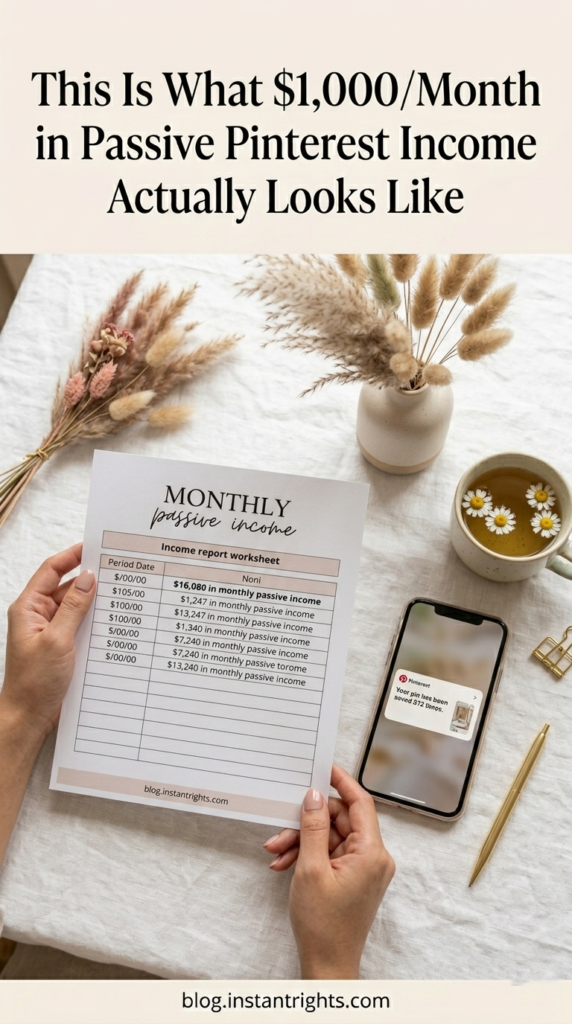
What This Actually Looks Like Six Months From Now
Picture this: it’s a Tuesday morning. You didn’t post anything last night — you didn’t need to. But your phone has three Etsy sale notifications from while you slept, a Gumroad download notification, and a comment from someone saying your mini app was exactly what they needed.
Your Pinterest account has been running quietly in the background, serving up pins to people who were actively searching for what you made. No algorithm anxiety. No posting schedule to keep up with. No face anywhere on the internet.
This isn’t a fantasy scenario — it’s genuinely what the combination of strong digital products, smart Pinterest SEO, and consistent pin creation produces. Some sellers in the educational worksheet niche are earning $200 to $800 a month from products they built once. Mini app creators on Gumroad are reporting $300 to $1,200 monthly from tools they built in a weekend. The sellers earning on the higher end have one thing in common: they stopped doing everything manually and found a system.
For the product side, the Kids’ Educational Activity Worksheet Generator handles worksheet creation without the blank-page struggle. If mini apps feel like the right direction, this list of 50 ready-to-build mini app ideas is the fastest way to find your starting point. And if you want a clear Pinterest strategy roadmap to tie it all together, the free 2026 Pinterest Viral Blueprint covers exactly how to build the traffic system underneath it all.
None of this requires you to be an expert, go viral, or show up on camera. It just requires starting.
You Already Know More Than You Think
You just read through ten real, working ways to earn from Pinterest without a personal brand, a big following, or a face on the internet. That’s not a small thing — most people spend months trying to figure out if faceless Pinterest income is even real before they find a clear answer.
So here’s a quick version of what to carry with you: Pinterest is a search engine, and search engines reward consistency and clarity. Digital products — printables, worksheets, Canva templates, mini apps — are a natural match for Pinterest’s search-driven traffic. And the hottest opportunity right now is the one most people haven’t heard of yet: mini apps. Small, useful, highly pinnable, and people are actively paying for them.
Start with one idea. Just one. Pick whatever feels most approachable and take one concrete step this week. The compounding starts the moment you do.
Whenever you’re ready to see what mini apps can look like as a product, this guide to what mini apps are as a digital product is a great first read. And the free 2026 Pinterest Viral Blueprint is there whenever you want the full traffic strategy laid out for you — grab it, read it over a coffee, and let it point you in the right direction. ✨
Frequently Asked Questions
Can you really make money on Pinterest without showing your face?
Yes — and a lot of people do it quietly and consistently. Faceless Pinterest income works because Pinterest is a search engine, not a social platform. Your pins are indexed and served to people based on keywords, not based on who you are. A well-made pin from an account with no profile photo and 12 followers can still get 50,000 impressions if it’s targeting the right search terms.
How long does it take to start earning from Pinterest?
Honestly — it depends on your niche and how often you pin, but most people start seeing meaningful traffic between 3 and 6 months of consistent pinning. Pinterest’s algorithm takes time to understand what your account is about. The sellers who see results fastest are usually the ones who niche down tightly, pin consistently, and treat their descriptions like mini SEO copy rather than captions.
Is Pinterest still worth it for beginners in 2026?
It really is — and in some ways it’s less crowded than it used to be, because a lot of creators moved to short-form video and stopped investing in Pinterest seriously. That’s actually good news for people starting now. The search volume is still enormous (Pinterest has over 500 million active monthly users), and the platform actively surfaces content from smaller accounts if the SEO is solid.
What are mini apps and can beginners sell them on Pinterest?
Mini apps are small, single-purpose web tools that solve one specific problem — think a grade calculator for teachers, a meal cost tracker for families, or a habit streak counter for wellness creators. They’re one of the fastest-growing digital product categories right now because they have high perceived value and are genuinely buildable without a coding background using today’s AI tools. Pinterest works incredibly well for them because a strong mockup pin of a useful tool gets saved at a high rate. This explainer on what mini apps are as a digital product is the best place to start if you’re new to the idea.
What’s the easiest Pinterest income idea for a complete beginner?
The lowest barrier to entry is probably affiliate marketing — you don’t need to create anything, just pin content that links to products your audience genuinely wants. That said, selling low-ticket digital printables (especially kids’ educational worksheets) has some of the best return per hour invested once you have a small catalog, because the same products keep selling without any additional effort from you. And for those willing to learn something slightly new, mini apps are the emerging opportunity worth paying attention to.
Try PinCraft AI Free Today
Design beautiful Pinterest pins in seconds with AI. Start your free trial — no credit card needed.

Helping creators use AI tools and Pinterest to build digital product income from home.