Here’s what nobody tells you before you start your first junk journal page: it’s going to look kind of bad, and that’s genuinely the whole point. I sat there for weeks watching gorgeous journal spreads on Pinterest, convinced I needed special paper, a die-cut machine, and some innate sense of design I clearly didn’t have.
Then I finally made my first page. It had a torn grocery receipt, a stamp from an old birthday card, and a strip of washi tape I put on crooked. It was a little ugly. And it’s still one of my favorite pages I’ve ever made, because it’s the one that got me actually started instead of just scrolling and wishing.
If you’re standing at the edge of your first junk journal wondering where to even begin, here’s everything I wish someone had told me before I made that first messy page.
The Thing That Actually Stops Most Beginners
If you’ve been putting off starting your junk journal, you’re honestly not alone in that. Most beginners get stuck in the same two spots — either they’re waiting to collect “enough” pretty supplies first, or they sit down with a blank page and completely blank out on what to put on it.
You’ve probably already tried scrolling Pinterest for an hour looking for the “right” idea before touching a single piece of paper. And that hour of scrolling didn’t actually get a page made, right? Been there.
But here’s the thing though — the supplies part and the idea part are both way smaller problems than they feel like right now.
Start With What’s Already in Your House
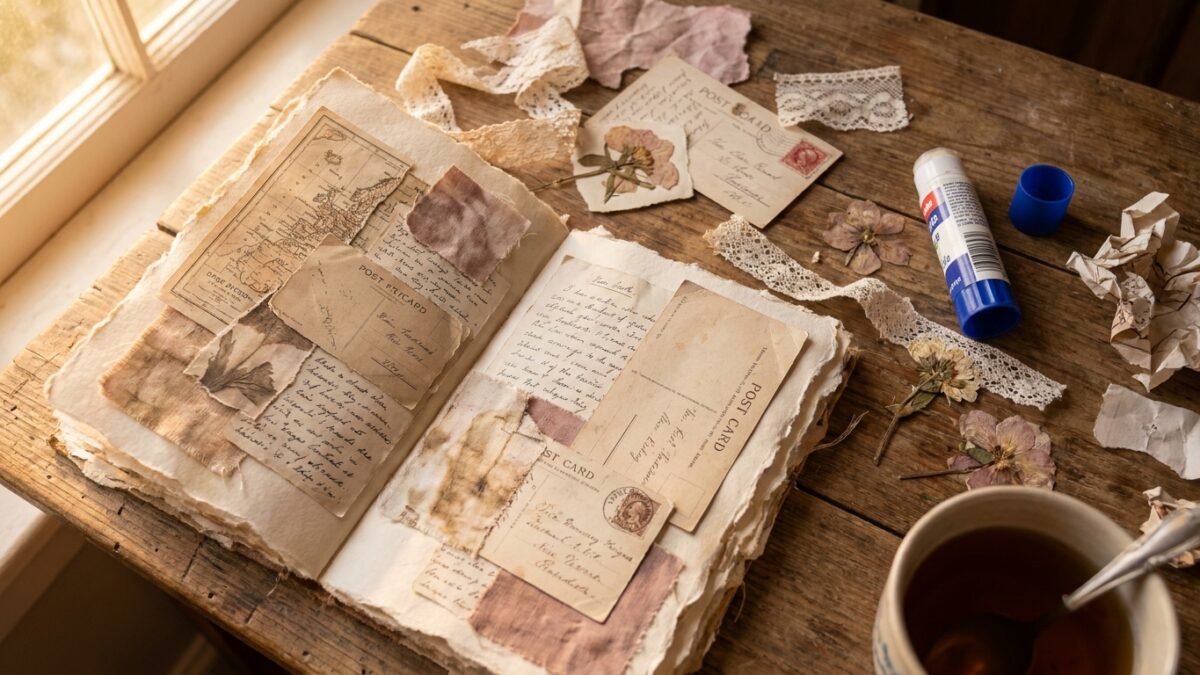
You do not need a full craft haul to make your first page. Old book pages, junk mail, receipts, tea-stained napkins, magazine scraps, and used envelopes are the actual backbone of most junk journal pages you’ve admired online.
A simple starter kit that costs basically nothing:
- Scrap paper from anywhere — books, mail, packaging
- A glue stick or basic craft glue
- Scissors (fancy edge scissors are a fun later upgrade, not a day-one need)
- Something with actual pages to journal into — even a cheap notebook works
That’s genuinely enough to make your first ten pages. The fancier stuff — stamps, vintage ephemera packs, specialty tape — is worth adding once you know what you actually enjoy using.
The Blank Page Problem (And the Actual Fix)
Even once you’ve got supplies, staring at an empty page is a real thing. Most beginners freeze here — not because they lack creativity, but because there’s no starting point to react to.
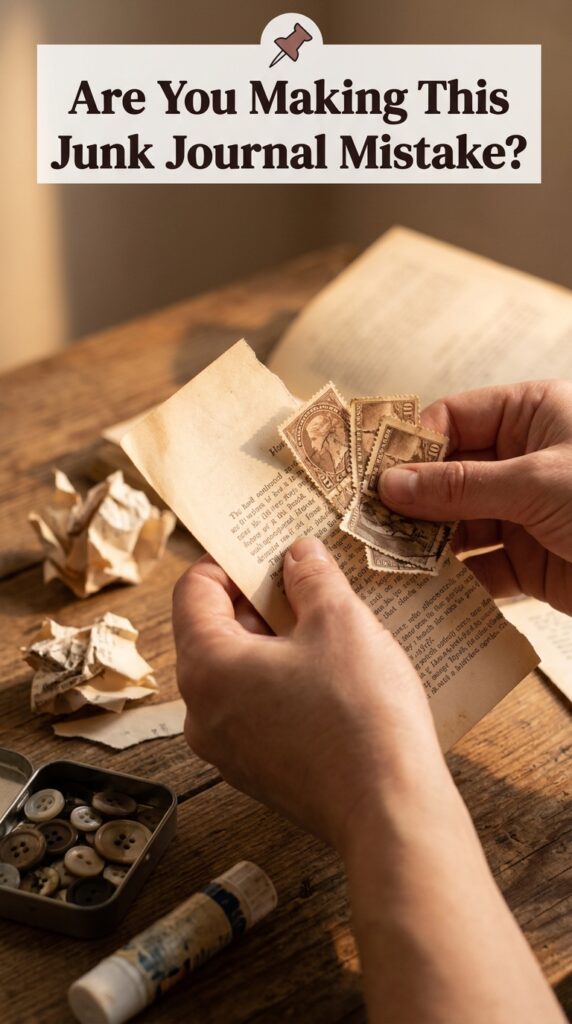
The fix that worked for me: stop starting with the page and start with one small object instead. Pick one scrap — a stamp, a pressed flower, a torn photo corner — glue it down first, off-center, and let everything else build around it. You’re not designing a whole page anymore, you’re just reacting to one thing you already placed.
If you genuinely go blank on what themes or prompts to build around, this is exactly the wall I kept hitting before I started using the Junk Journal Prompt Generator. Instead of sitting there hoping for inspiration, you type in a vibe — cozy autumn, travel memories, whatever — and it hands you actual page ideas and prompts to work from. Not gonna lie, it saved me a lot of staring-at-nothing time.
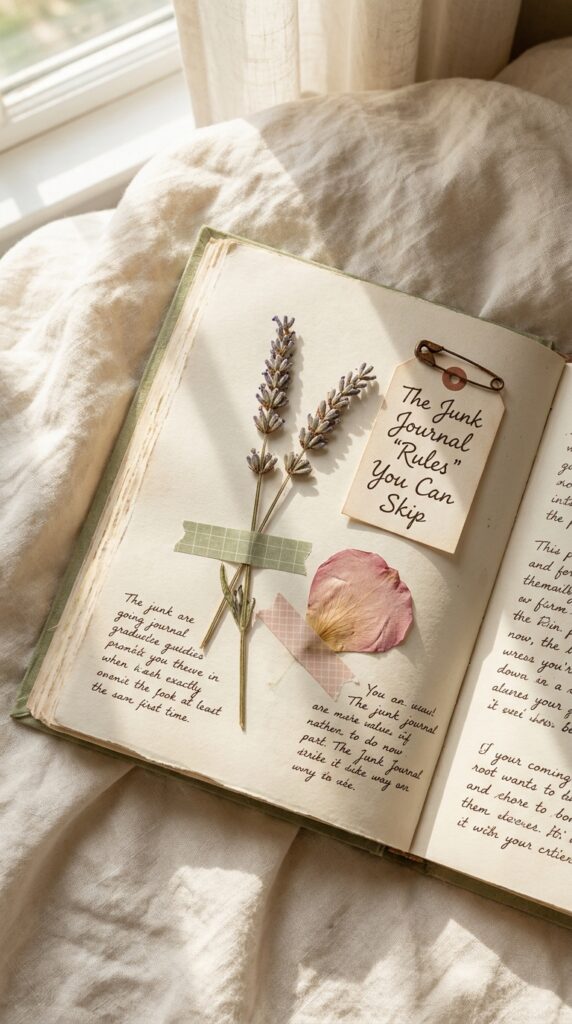
You Don’t Need to Follow the “Rules”
There’s no official junk journal police checking whether your tape is straight or your handwriting matches your theme. Some of the most-saved junk journal pages online are the ones with visible tape edges and slightly crooked stamps — that texture is the appeal, not a flaw to hide.
A few “rules” you can ignore completely:
- Your paper doesn’t need to match a color scheme
- Pockets and tuck-ins don’t need to be perfectly measured
- You can absolutely journal on top of a busy background
When You’re Ready to Add the Fun Stuff
Once you’ve made a handful of pages and know your style leans cozy, vintage, or colorful, that’s the right moment to start layering in extras. The Junk Journal Prompt Generator pairs really well here too — it’s not just for beginners staring at a blank page, it keeps working once you’re deep into your tenth journal and just want fresh prompts without repeating yourself.
What It Feels Like Once You Get Past Page One
Picture flipping back through your journal a few months from now and landing on that first messy page — the one with the crooked tape and the stamp you weren’t sure about. It stops looking like a mistake and starts looking like proof you actually started.
That’s genuinely the whole transformation here. Not a perfectly styled journal from day one, but a real, growing collection of pages that gets a little more “you” with every one you make. The tenth page always looks better than the first — and the first page is the only reason the tenth one exists.
You’re Ready to Make Page One
You now know the three things that actually matter here: your supplies can come from your recycling bin, the blank page problem has a real fix, and there are no rules police coming for your crooked tape.
Start with one scrap of paper and one glue stick. That’s the whole barrier to entry. And if you want a running well of ideas whenever you sit down to make a page, the Junk Journal Prompt Generator is exactly what I use to skip the blank-page stare. No rush though — it’ll be there whenever you’re ready for it. ✨
❓ Frequently Asked Questions
What supplies do I actually need to start junk journaling?
Just scrap paper, a glue stick, scissors, and something to journal into. Old mail, receipts, and book pages work fine for your first pages — you can add specialty supplies later once you know your style.
How do I know what to put on a junk journal page?
Start with one object instead of a whole design — glue down a single scrap first and build around it. If you go blank often, a prompt generator tool can give you themes and page ideas to work from.
Is junk journaling hard if I’m not artistic?
No — most of the appeal is texture and layering, not drawing skill. Crooked tape and imperfect stamps are part of the look, not something to hide.
What’s the difference between junk journaling and scrapbooking?
Scrapbooking usually documents specific memories with photos in a structured way. Junk journaling is looser — it’s about texture, ephemera, and mood, and pages don’t need to follow a set theme or timeline.
How long does it take to finish a junk journal?
There’s no real timeline — some people fill a journal in a weekend, others add a page every few weeks for a year. It’s meant to be an ongoing, low-pressure project rather than something with a deadline.

Try PinCraft AI Free Today
Design beautiful Pinterest pins in seconds with AI. Start your free trial — no credit card needed.

Helping creators use AI tools and Pinterest to build digital product income from home.